In this article
Create a small archive that preserves what you received while leaving room for annotations and corrections.
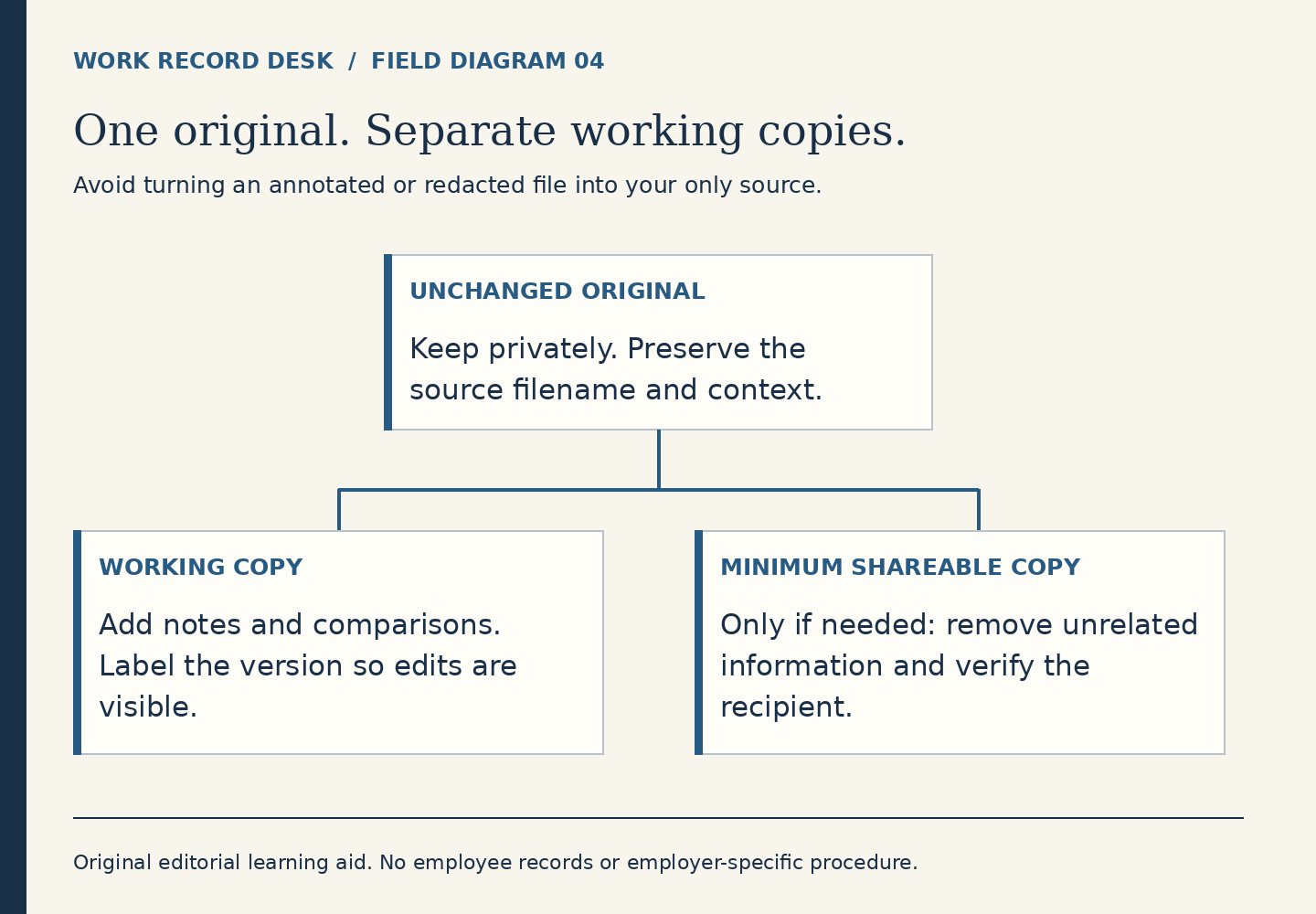
A folder full of files named “paystub-final” is difficult to trust. A later download may replace an earlier version, and a highlighted copy may become indistinguishable from the source. A useful personal archive preserves the original document, gives working copies a clear purpose and makes the latest confirmed version easy to find.
Build three simple areas
Use one area for originals, one for working notes and one for copies prepared for a specific recipient. These are editorial suggestions, not employer-required folder names. Store only records you are entitled to retain. Personal employment records do not create permission to export company confidential material or other employees’ information.
For each original, keep the file as received and note its source, covered period and retrieval date in an index. A short filename might combine the payment date, record type and a version number. Avoid putting a Social Security number, bank account number or unnecessary personal detail in the filename, where it may appear in search results or sharing notifications.
Practice with a revised statement
In a fictional archive, Taylor saves a statement on October 2. A corrected version becomes available on October 6. Taylor retains both originals and labels the second as a later received version. The index explains which record is understood to supersede which, and cites the accompanying explanation if one exists.
Taylor annotates a separate working copy to compare the changed line. The annotations do not alter either source file. If the later download has no visible correction label, Taylor records exactly that uncertainty rather than naming it “official corrected final.” File management should preserve the evidence, not manufacture confidence about its status.
The same principle applies to email. Keep the message that supplied a document with enough context to connect it to the attachment. A detached file can lose the explanation of why it was reissued. You do not need to retain unrelated conversation in every sharing copy, but the private archive should preserve the relevant provenance.
Check the archive actually works
- Open a saved document and check all expected pages.
- Confirm that the visible year and period match the index.
- Check a backup copy instead of assuming synchronization succeeded.
- Keep editing and redaction work away from the originals.
- Review who can access the storage location and any shared folder.
The FTC’s security guidance includes backing up important data. Its identity-protection advice also emphasizes safeguarding records with personal information. A backup that everyone in a household or former project team can open may solve availability while creating a privacy problem. Choose storage appropriate to the sensitivity of the records.
Avoid a universal deletion rule
The IRS explains that retention depends on the record and circumstances, and nontax reasons can require keeping documents longer. Employer retention duties should not be copied into a personal “delete everything after this date” rule. Unresolved questions, corrections and other obligations may change what you need to preserve.
Before sending a copy outside your employer’s approved process, use the redaction review. The best archive lets you answer three questions quickly: what did I receive, what changed, and exactly what did I share?